Ever since starting to research Newark history I have wanted to read a biography of Louis Danzig. Immigrant Jew, Americanized Newarker, consummate political operative although never in elected office, most significantly, tenured executive director of the Newark Housing Authority (NHA) which in the 1950s and 60s led some of the most expansive urban renewal initiatives in the US and was central in influencing the policy of its implementation. Danzig, like his native Newark, is often overshadowed by the likes of Robert Moses and New York City. Robert Caro’s The Power Broker possibly provides a blueprint for how to approach a history of a city, a program for its transformation and a man standing in the middle of that maelstrom. But Newark, and Danzig, precisely because they are both often obscured by the halo of “the city” and “the power broker”, provide an opportunity to develop an understanding of the interaction of personal ambition, municipal politics, commercial interests, federal influence, and community reaction that go into imagining and then implementing the grandiose and foolish project of transforming a city while controlling the outcome.
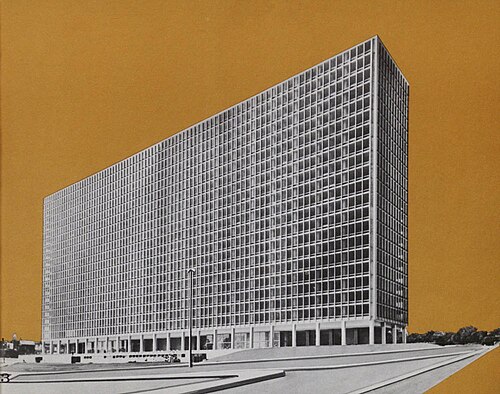
Harold Kaplan probably came the closest to writing a Danzig biography in Urban Renewal Politics: Slum Clearance in Newark. Kaplan covers the first decade of Danzig’s tenure, from 1949 to 1960, when the NHA transformed from an organization focused on addressing public housing needs to one geared towards redevelopment. Most interestingly, the book describes how the NHA came to dominate urban redevelopment in Newark by mastering the political de-politization of the process of planning, implementation, approval and political support. None of Danzig’s rivals in politics, real estate, business or citizen concerns could approach his willingness to outwork, out prepare and out influence them. Clearly Kaplan, having worked for the NHA, was a proponent of Danzig and the NHA.
The shortcomings of Urban Renewal Politics, are exactly what make the prospect of researching Danzig and Newark urban renewal so delicious. How did Louis Danzig come to be appointed to head the NHA and what prepared him to navigate Municipal, State and Federal politics and bureaucracy so successfully? It was during the second decade as head of the NHA that many of its plans started to come to fruition. What can be learned about the politics of urban renewal that is different from the 1950s? How did Danzig adapt to these changes? To what extent did NHA and its policies contribute to the political and civil unrest that would erupt in rebellion in the summer of 1967? How did Danzig view the continued decline of Newark in the 1970s and his role in it after his retirement in 1969? Each one of these questions feels like a gold mine waiting to be discovered.
 Newark State of Mind
Leave a comment